Of points and plants
By Rose · May 1, 2026
The question, from my friend Mani, appeared soon after I set up a game between her and Alison Davies. Given that Ali (not a guy) is now trouncing several TongueTiers in game after game, I thought the answer might deserve a broader audience — as the first player profile in what we hope will be a long-running series.
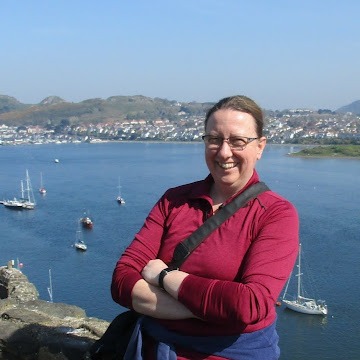
Ali was born in Belize, grew up in Somalia and Italy, and studied in the United Kingdom, including two years at an English boarding school that was both too Enid Blyton and not enough. She holds a doctorate in plant ecology and evolution and, alongside teaching, remains an active field botanist (more on that in the Q&A below).
On the TongueTied board, she is fierce but generous, unrolling seven-, eight-, even nine-letter words in three languages, all while avoiding blocking and ready to celebrate the moments when her opponents (or at least this opponent) come even close to matching her prowess.
Ali spoke to me on a gloriously sunny afternoon in Garching, a small town just north of Munich and not far from her home of nearly 30 years.
—Rose
What's your favorite word you've played lately? It needn't be the highest scorer; mine is LARP, for example, which just makes me laugh.
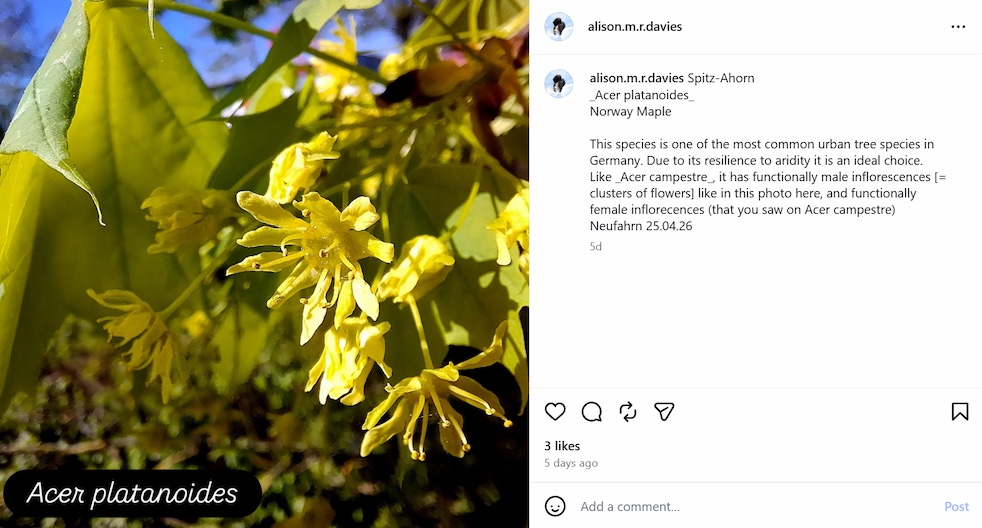
STEINPILZE. It didn't get a lot of points, but it is a cool word. Not just the botanical connection — ceps, in English, or porcini in Italian — but it's a compound word, in German (yes!) AND it uses a "z", a letter I have always regarded as being a penalty draw.
What's your strategy on the board, and does it change according to the languages you're playing in?
Strategy?! Don't make me laugh. I am possibly the least strategic person I know when it comes to games. My nearest and dearest despair of me. I know I could siege a corner or a 3W square, but probably wouldn't bother. I also don't think placing words that annex sections of the board is fun or fair. However, if, for example, I were to draw a U, and the game was halfway through, and the Q hadn't appeared yet, I would hold onto the U for a couple of rounds, just in case. I have also been known to swap a rackful of vowels in desperation.
I do change my style depending on the languages in play. In English, the options for combining two- or three-letter words are OK, but playing in additional languages dramatically expands one's options. The pattern of words on the board changes because you can place words side-by-side, forming blocks or clusters — something I had seldom done before playing TongueTied.
If the numbers are to be believed, Italian and English each have circa 30% more two-letter words than German. So, strategically, even with a little knowledge of personal pronouns or short verb conjugations in Italian or English, one could maximise the chances of building word clusters. It certainly makes for a more interesting game.
What role have games, online or otherwise, played in your life up to now?
I go in phases. When our five-head family were younger, we used to play a lot of games; some were competitive, and others cooperative. Some German, some English. Classics like Monopoly, Andor, Jenga, cribbage and chess.
As the family dynamic changed, so too has the world. The digital age exploded. Everyone plays online on their devices. Personally, I only have a couple of apps: Candy Crush and Dragons/Monsters/Heroes, which has a small, anonymous, online "team" element. The other games I use are Wordl and Connections (NYT) and the Guardian Short Crossword, all of which I do with my husband in the mornings. Finally, I play logic puzzles and "Zebra puzzles". I play when I'm bored, waiting for the water to boil, or while traveling.
Talk to me about your current field botany project. What is it and how did it start?
My academic career of choice was systematic botany — the study of taxonomy, evolution, and diversity in plants. After an extended career break for family, returning to this niche field proved rather difficult. Botany took a back seat to language teaching. About 18 months ago, however, I applied for a unique job that ticked all my botanical boxes — but it was not to be. Afterwards, I spent some time reflecting on why this particular "fail" bothered me so much. Did I still really care about botany? I set myself a threefold challenge combining commitment, botanical finesse, and a little bit of outreach: to post a novel picture of a plant on social media every day for a year. I wanted people to appreciate the variety of plants we have under our noses. Three hundred and sixty-five days and 360 species later, the best outcome has been discovering plants I hadn't noticed before — because I hadn't been looking.
For example, a nearby topsoil heap supported more than 70 taxa over the growing season. As one might expect, pioneer species like colt's foot, and opportunistic generalists like common yarrow made an appearance. But it was the other species that told a really interesting story. Field larkspur suggested a historical arable landscape. Traditional household herbs like soapwort indicated human habitation. Alfalfa pointed to modern agricultural seed mixes, while perennial mugwort reflected nutrient-rich disturbance like modern fertilizer applications and shaggy soldier indicated imported garden soils used in modern horticulture.
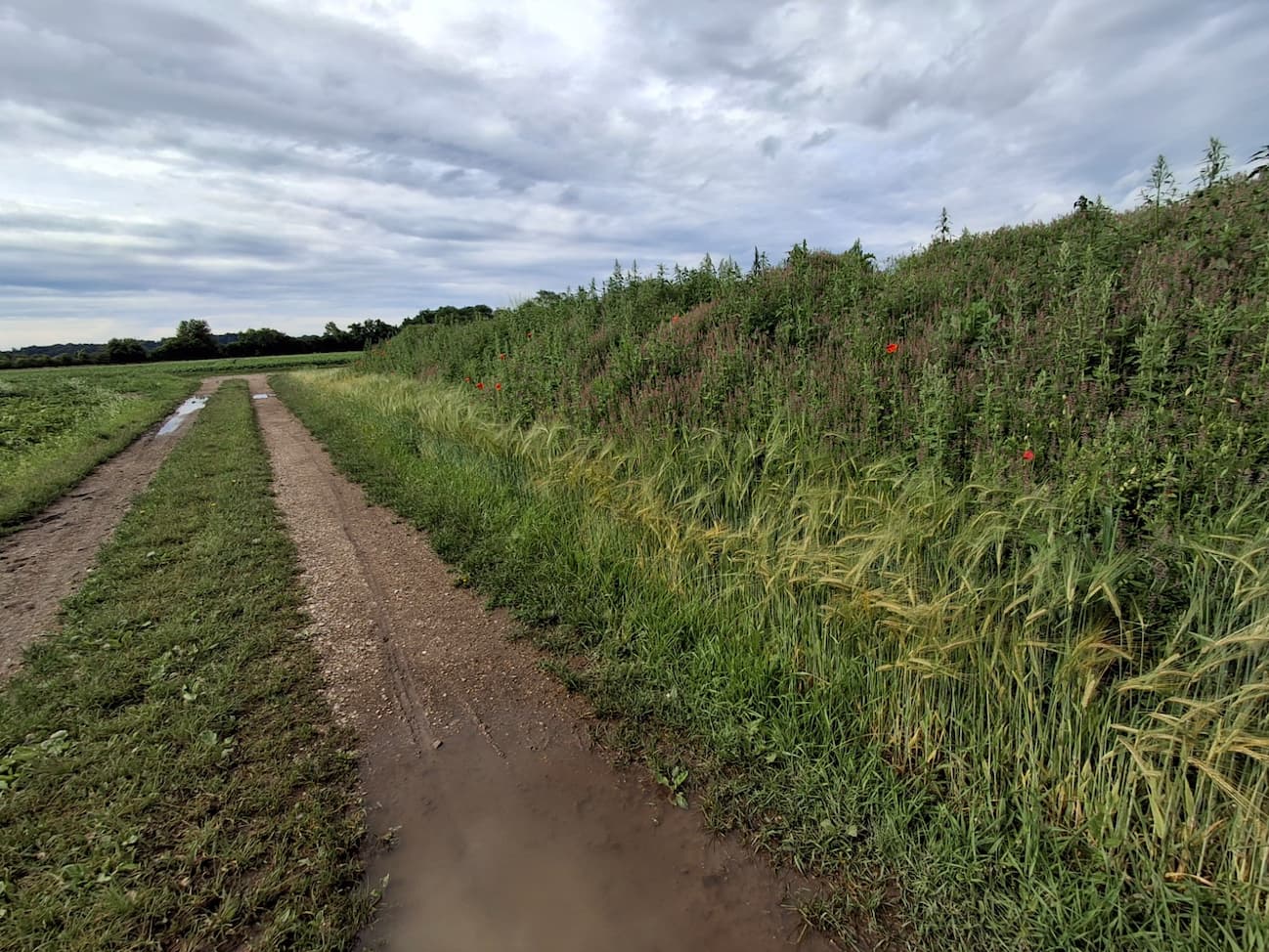
Simply contemplating the types of species that grew tells you that this patch of loose soil has a historical association with arable land use, probably on the margin of human habitation, and a more recent impact combining modern horticulture and agriculture, with just a dash of opportunistic colonization. Which, by the way, is supported by historical documentation dating back to the Middle Ages.
I find it fascinating that seeds in a heap of soil can tell us so much about the historical land use of even a small area.
OK, this feels like a prosaic question after that dig through the centuries. Nevertheless: any wishes for TongueTied features?
A prosaic answer, then. Because the remaining tile score is not deducted after the end of the game, it doesn't matter if you still have a ß or a Q in your hand. I would prefer that it did. As with seeds, I like the full history of my rack recorded.