Who's keeping score?
By Rose · May 21, 2026
We wanted to let you know about a feature we quietly added to TongueTied recently, and one you may find nearly as compelling as the game itself: a set of stats pages showing your performance over time, independently and in relation to your opponents.
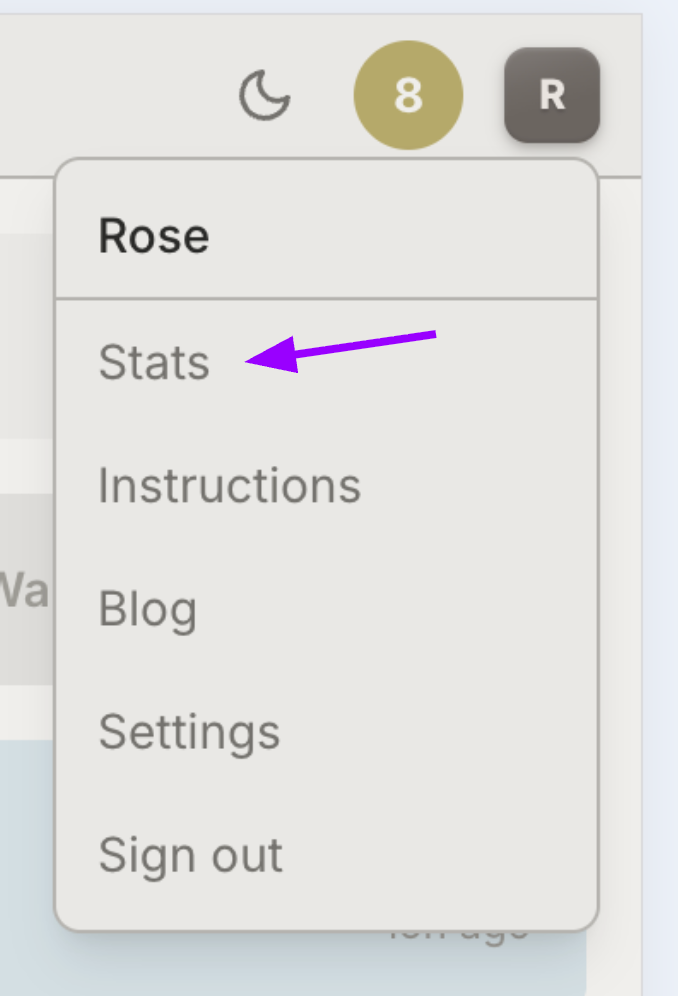
Find the pages by tapping on your initial in the upper right-hand corner of the screen and choosing "Stats" in the drop-down menu.
On your own page, you see delicious details like the highest-scoring words you've played, your sweeps, and your favorites by frequency.


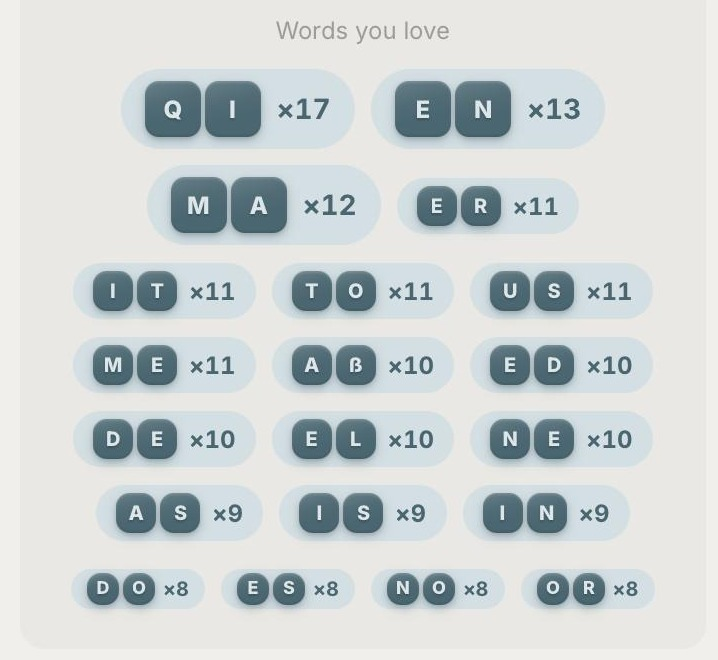
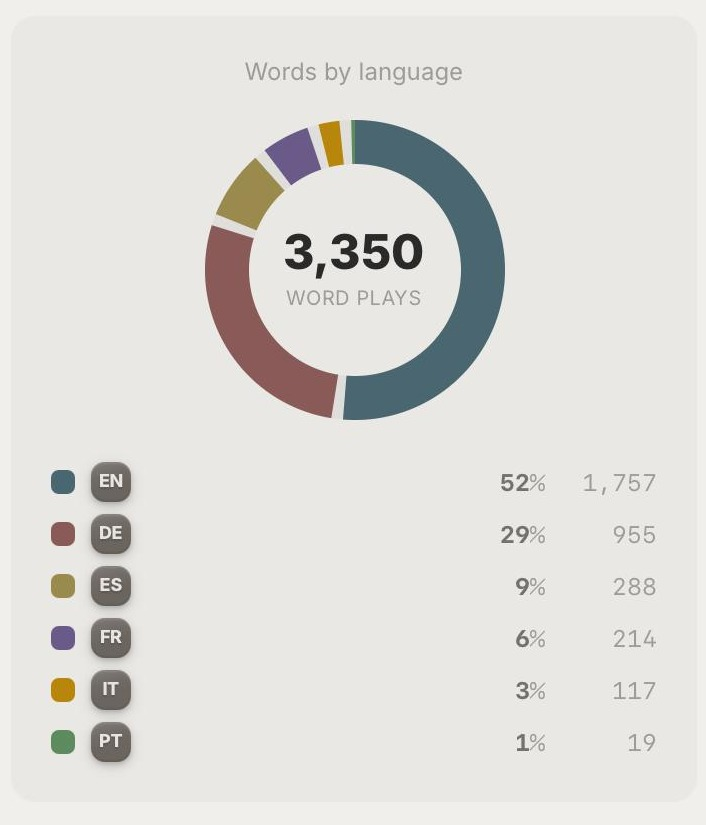
I'm slightly embarrassed by how often I fall back on QI. My favorite detail here, however, is a breakdown of which languages I'm using; I'm curious how yours match up.
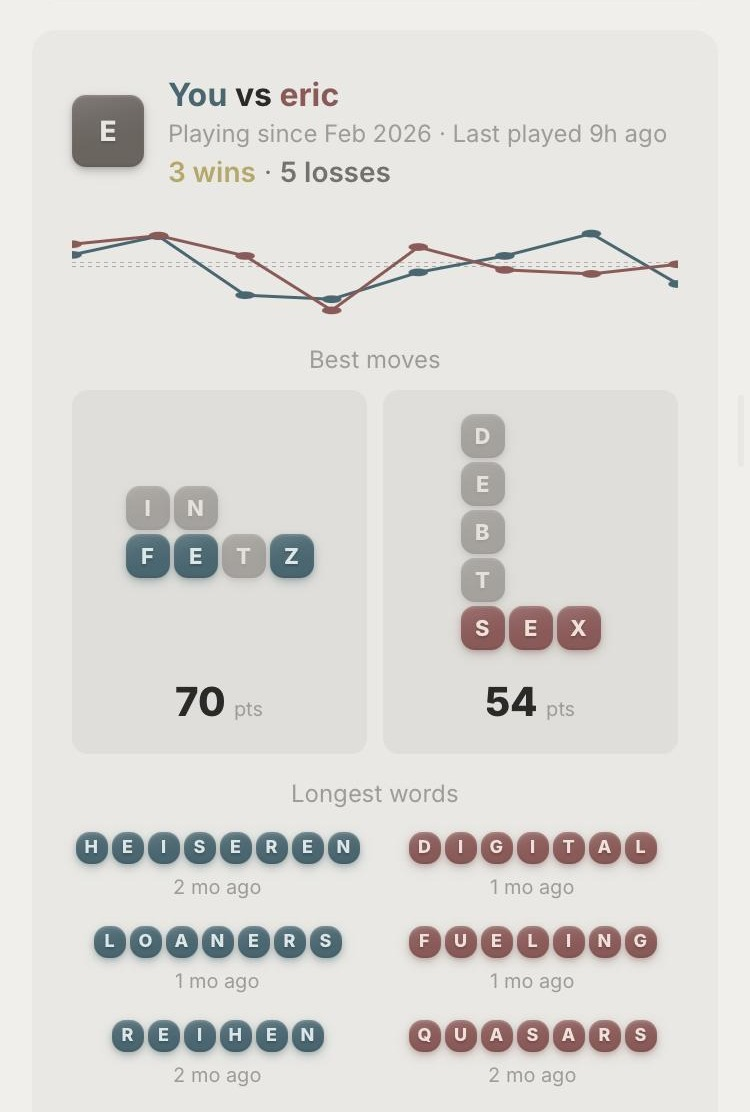
You'll have to let me know, as these pages are private. What I can see is who I've played, my record against them, and highlights from those games.
Games like TongueTied – and language learning generally – scramble the idea that there are word people and numbers people. I love reading and writing and puns and poetry, but I'm not someone who picks up foreign languages easily, and my win-loss record in this game is shameful. Or at least I feel some shame. So while I think of TongueTied players as people who like language, I could have it wrong. Maybe you like a good grid, a bag of numerical value-labelled symbols, and an agreed set of patterns to follow. Maybe calculating your chances of drawing a J in the next round is what appeals.
Or maybe you like these things and languages and a good book. It's possible! (Just don't tell the people running the Bavarian school system, who still divide kids at the end of fourth grade not just on whether they're university material, but by their interest – at age 10 – in the humanities vs. math and science.)
If you're in that final group, you Renaissance men and women, the stats pages are for you.